

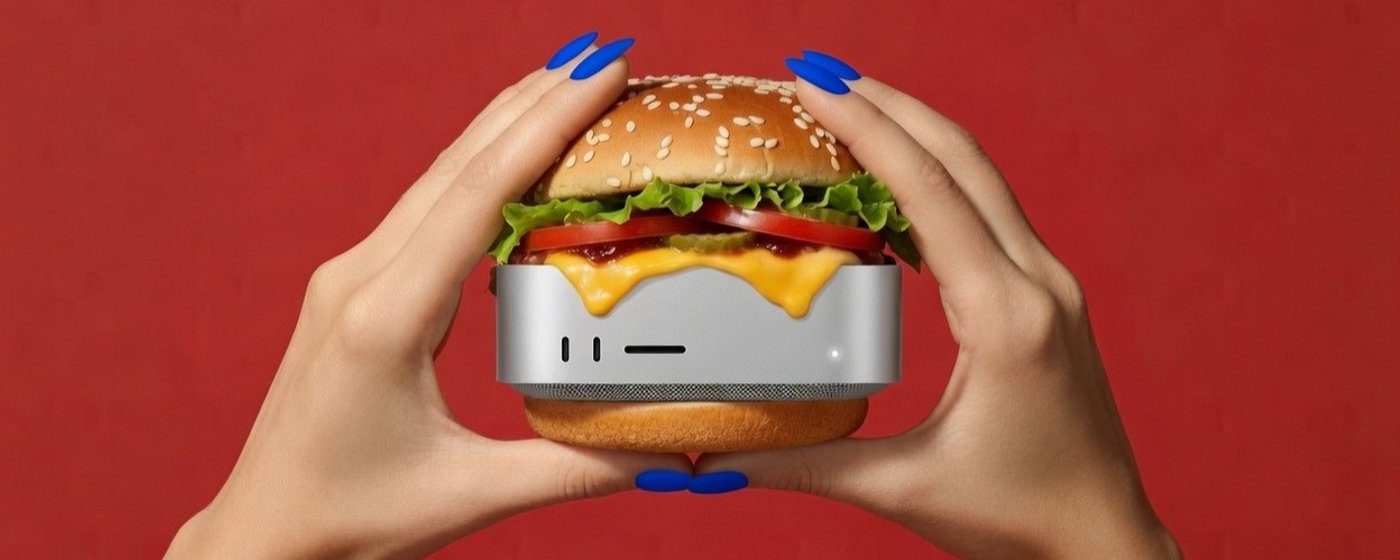
We Built Our 40 Year Old Restaurant Group a Brain
I asked our restaurant company a question a few days ago. Out loud. No keyboard.
"Which restaurant needs my attention most this morning, and what's going on there?"
And it answered me. With its own data. In plain English.
I don't come from a coding background. Three months ago none of this existed. This is the story of how we gave a 40 year old family restaurant group a brain.
Where it started
Our family of restaurants has spent more than four decades in franchising, operating over 50 locations along the way: Dairy Queens, Schlotzsky's, Cinnabons, and more, with some exciting additions coming soon. Earlier this year, leadership handed me a mandate that changed everything: bring AI into the business in whatever capacity I could. We decided to learn the new tools ourselves rather than wait for someone to sell them to us.
Start with people, not systems
The first move was small on purpose. I sat down with about ten of our leaders, department by department, from accounting to HR to operations. We mapped their workflows and put Claude into their daily work. No grand platform. No big rollout. Just one person at a time, getting superpowers.
What happened next is the part nobody tells you about AI adoption: the tool mattered less than the confidence. People started taking on tasks they used to fear. And once a whole leadership team stops being afraid of the work, the business starts moving at a different speed.
Then rebuild the machine
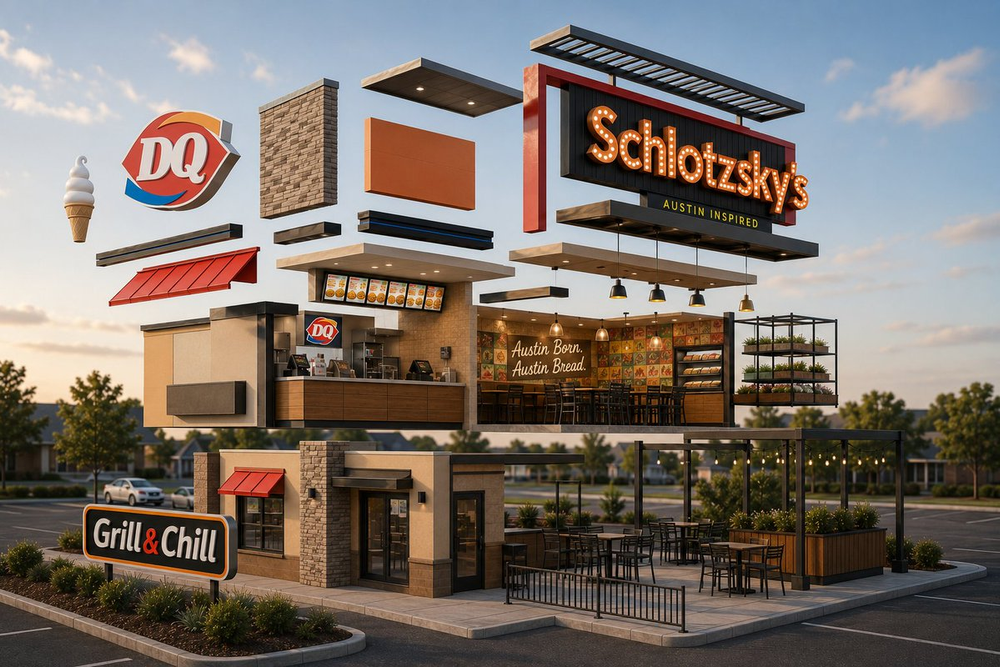
With the team powered up, we did something more radical. We deconstructed the operations and management side of the business, piece by piece, and rebuilt it with intelligence as the infrastructure.
Three highlights:
The leaderboard. Dairy Queen ran Fast Lanes and Lemonade, a nationwide drive-thru speed contest, and corporate gave us no tooling for it. So Genaro, our VP of Business Operations, and I built our own in two hours: a scheduled report lands in an inbox, AI reads it, and a live leaderboard for our stores updates on its own. When the contest ended, one of our Dairy Queens was the fastest drive-thru in America.
The banking. Our restaurants bank with different partners, and moving money used to mean hours of math, spreadsheets, and reconciliation. There was no quick cross-bank option available to us, so we built it. Our accounting team now generates transfer files that are securely sent to our banking partner in one click. That alone hands accounting back 6+ hours a week.
The accountability layer. Every morning, an audit runs across all of our stores, comparing yesterday's sales in the POS against our accounting system to the penny. Cash overs and shorts get flagged the same day. Missing deposits get called out. Third-party delivery payouts get reconciled against every fee those platforms charge, so their cut ties out to the dollar.
None of this was about replacing our team. It was about deleting the parts of their day that never needed a human in the first place.
The Mainframe
Every one of those wins created data, and data wants a home. So we built one. We call it the Mainframe, and all of our restaurants live on it today. It funnels our service providers into a single view: banking balances and transfers, daily sales audits, deposit verification, credit card and delivery reconciliation, labor, waste, food supply, even weather data tied directly to sales, so we know exactly how a storm moves a store's numbers.
Squeaky-clean operations, at a glance. And we're still early.
The Brain
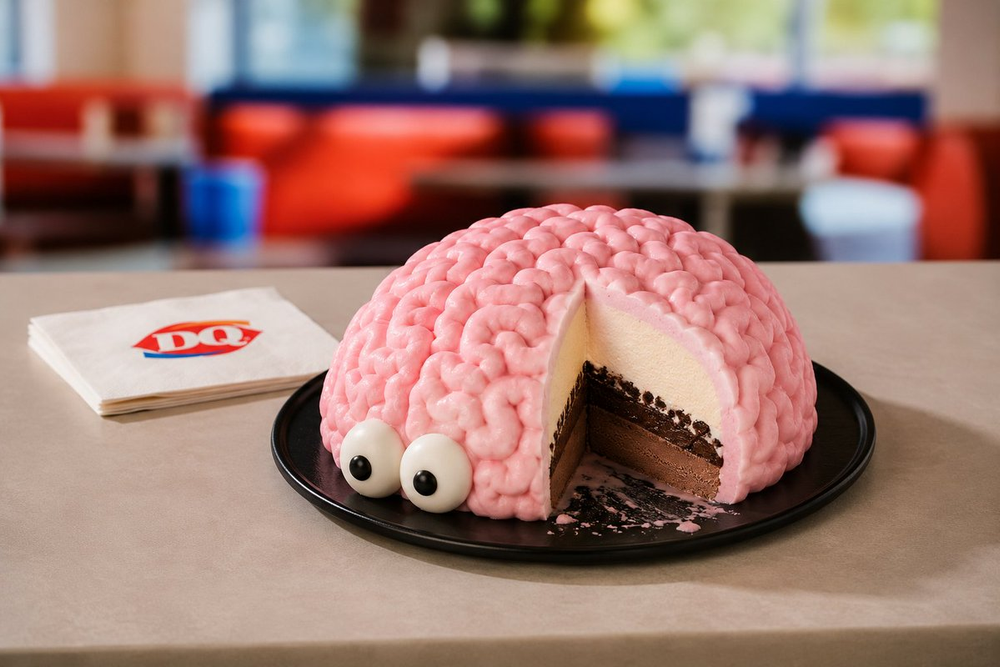
Here's where it gets fun. Underneath everything, I stood up a private server system we call the Brain. It has taken in more than 230 million lines of our data, and it's still eating. Sales. Labor. Traffic around our stores. Weather. Meeting transcripts that flow in automatically after every recorded conversation. Nearly everything the business knows, in one place, kept private and local on our own hardware.
That's what let me build the thing I wanted most for our CEO and our staff: the ability to talk to the business. Ask it what's moving sales this week. Ask which stores are drifting on labor. Ask which items keep showing up in the waste numbers. It answers, because it has the whole body of the business to draw from.
And lately it has been growing hands. A quiet fleet of agents already runs the standing jobs: pulling reports, prepping the morning audits, watching for anything that breaks overnight. When a meeting gets recorded, the transcript flows straight in, and the system scans the conversation for any moment where I said we should build something or research something. It drafts the task, attaches a plan of action, and waits for my approval. I mention an idea in a meeting, and shortly after, a plan is sitting there asking permission to become real.
Real data, real risk
I want to be honest about the weight of this, because I'm not doing it as a hobbyist. This is real money, real people's livelihoods, real risk. So I work on the system, not just in it: constant security audits, self-repair for when things go down, hardening against failures you would never think to predict, and a search infrastructure so the models can find the right needle in 230 million lines instead of drowning in them.
A few years ago, this stack would have taken a funded team years. It took one non-coder less than three months, working with AI as a true collaborator. I still step back sometimes and just stare at it.
Why we build this way
A business is a body. Thousands of small pieces keep it alive: crews clocking in, registers ringing, deposits landing, trucks unloading, meetings deciding things, weather pushing customers in or away. Capture all of it and give it a nervous system, and you get a business you can talk to.
But here is the conviction underneath all of it. We are named Food & People, and we mean it. I don't build AI to replace anyone. Nothing I make is pointed at a person's job. Everything is pointed at making our people more capable and giving them back time for the work that actually matters.

Cash gave way to credit cards. Paper ledgers gave way to spreadsheets. The filing cabinet gave way to the cloud. Now labor gives way to thought.
So let me leave you with the question that started all of this: if your business could talk, what's the first thing you'd ask it?
I write about how each piece of this gets built, piece by piece, over on X. https://x.com/johnczertuche Follow along there. And if you’re wondering what this could look like in your business, we’d love to talk.